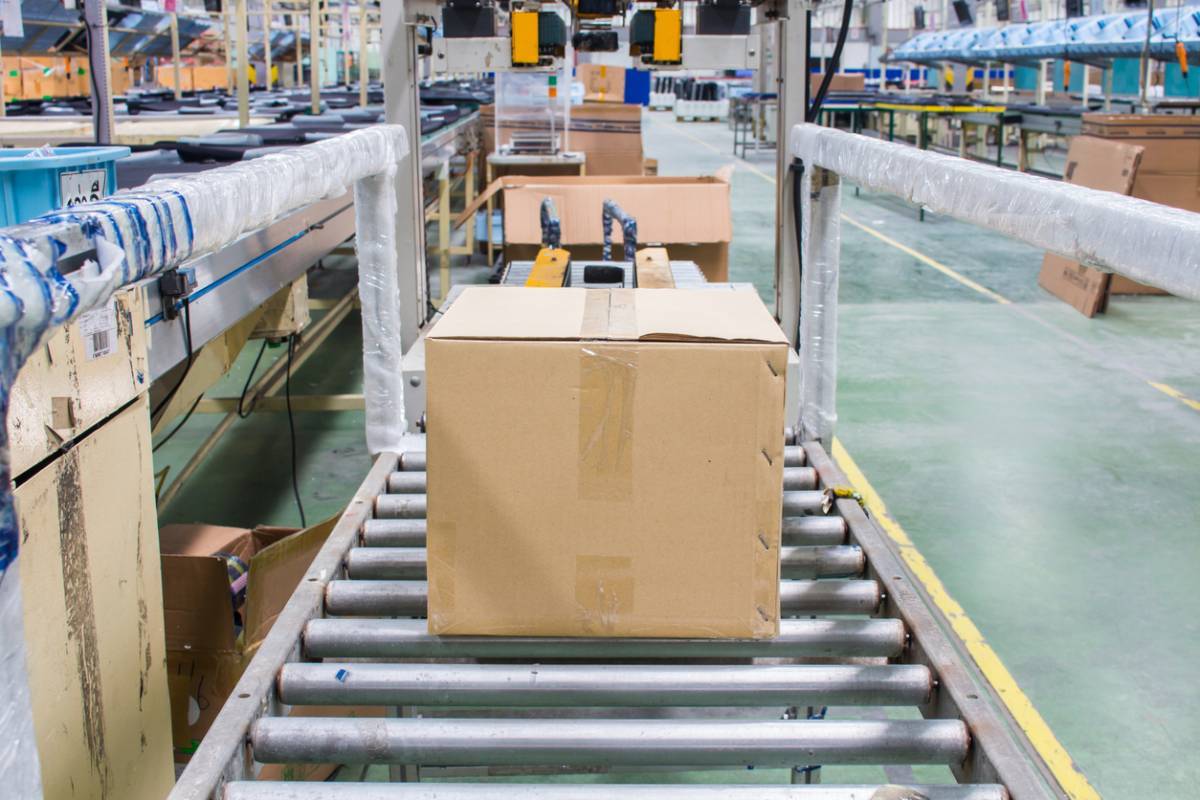
How to choose the right strapping machine for your business?
The strapping machine secures goods by wrapping them in strong bands. It can be used on any type of load packed in cardboard or pallets. It is used for strapping products prior to packaging and transport. Here are a few tips to help you choose the right strapping machine for your business.
Definition and functions of strapping
Strapping is the process of closing a load or package by wrapping it with a clamping band. Products are strapped to supports or to each other using a machine called a strapping machine. As you can see on this page, strapping machines are industrial packaging machines that come in different types. These devices are used to keep parcels in good condition and prevent breakage during transport.
The main functions of strapping include securing the contents of a pallet to prevent items from falling out during transport. The operation also enables goods such as cardboard boxes to be compacted to save space in a container, for example. It is also used to solarize several elements, such as pipes, so that they can be moved together more easily.
Strapping is used in a variety of industrial sectors. These include :
- logistics, which uses it to pack, store, handle and transport products,
- the printing industry, which uses it to package newspapers and magazines ready for delivery,
- the metallurgy sector, where the operation enables equipment of various dimensions to be made compact and interdependent,
- the building materials industry, which uses it to secure loads for transport.
In these different sectors, the strapping machine plays an important role in providing the clamping link needed to hold products efficiently. This tie is often a plastic or metal strap that needs to be put under sufficient tension to perfectly tighten a package.

What are the different types of strapping machines?
The main types of strapping machines used in the company are: automatic strapping machines and semi-automatic strapping machines. Each type has specific characteristics that make it more useful in some cases than in others.
Automatic strapping machine
This machine makes strapping loads effortless. It must be plugged into a mains socket to operate. It features an arch to wrap strap around a package or pallet more quickly.
Semi-automatic strapping machine
The semi-automatic strapping machine is a bowless automatic strapping machine. Its use requires the intervention of an operator who pulls the strap to position it on the parcel. Thanks to its dimensions, this device is easy to move around.
How do you choose the right strapping machine for your business?
You need to choose the strapping machine that best suits your business processes. For example, if you usually pack your goods in series, it’s best to opt for an automatic strapping machine. In fact, this machine can perform up to 70 strappings in one minute, saving you time.
We recommend the semi-automatic strapping machine if you are looking for a highly mobile machine. This strapping system is ideal for use in confined spaces, as it takes up very little space. Suitable for all work surfaces. It is ideal for strapping cartons and small products.